
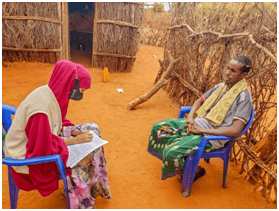
Research and Innovation
Research and innovation are critical for addressing complex challenges and driving sustainable development in Somalia. By generating context-specific evidence and developing innovative solutions, Somali NGOs can better understand local needs, improve program design, and enhance the effectiveness of their interventions. Research and innovation also help bridge the gap between global practices and local realities, fostering adaptive and forward-looking approaches to humanitarian aid, climate justice, advocacy, and capacity strengthening.The following are the key areas of priorities:
- Conducting evidence-based research to inform policy and programming decisions.
- Invest in knowledge management and sharing learning.
- Innovating climate-resilient technologies and practices to mitigate the impacts of climate change on agriculture, water, and livelihoods.
- Exploring new approaches to localization of aid, focusing on efficient resource allocation and community-led solutions.
- Investigating the socio-economic impacts of crises, such as displacement, food insecurity, and environmental degradation, to better understand vulnerabilities and resilience strategies.
- Developing and scaling digital solutions to improve communication, data collection, and resource mobilization for local actors.
- Promoting collaborative research initiatives between Somali NGOs, academic institutions, and international partners to leverage knowledge-sharing and expertise.
Approaches
- Participatory Action Research: Engaging communities in identifying problems and co-creating solutions that are culturally and contextually relevant.
- Establishing innovation hubs or networks to incubate and test new ideas, tools, and approaches.
- Utilizing data-driven decision-making: Collecting and analyzing real-time data to track progress, measure impact, and adapt strategies.
- Partnering with technology providers and universities to create scalable digital tools for resource tracking, training, and advocacy.
- Ensuring local knowledge integration, drawing on traditional practices and indigenous knowledge to complement modern solutions.
- Building capacity for research ethics and methods to ensure high-quality and culturally sensitive data collection and analysis.